
What Makes a Good Leaf Blower? 7 Things That Separate a Quality Blower From a Cheap One
October 9, 2026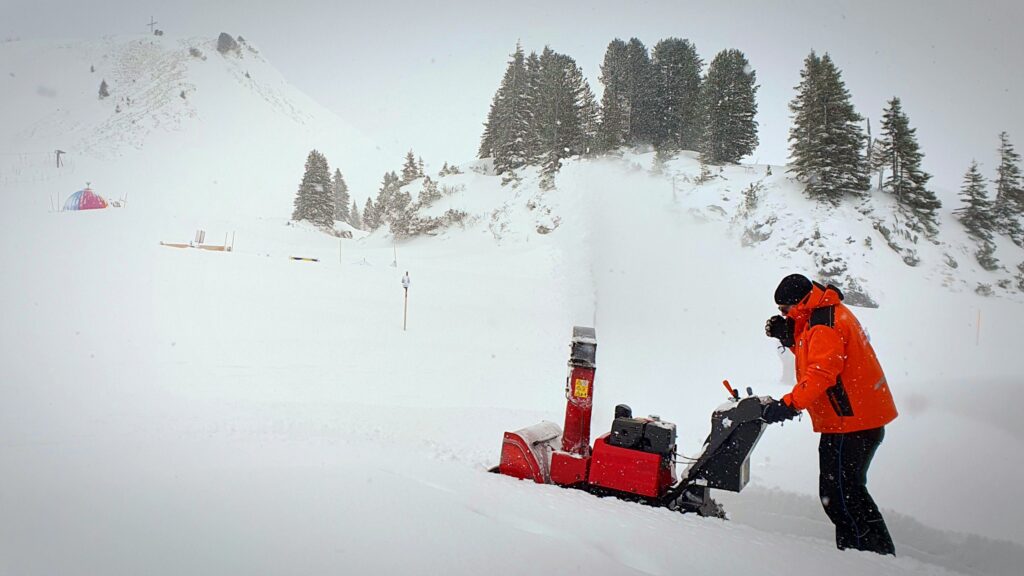
Winter weather on the South Shore can be unpredictable. Some storms leave a few inches of light snow. Others bring heavy, wet accumulation, wind-driven drifts, or the dense pile left at the end of the driveway after a plow goes through.
That makes choosing the right snowblower less about buying the biggest machine available and more about matching the equipment to your driveway, property, and the kind of snow you usually deal with.
For homeowners and contractors around Marshfield and the South Shore, Smith & Sons carries snow-removal equipment, parts, and service to help keep properties moving through winter. Their current equipment lineup includes Ariens residential and commercial snowblowers, while their service department works on snowblowers and stocks parts for brands including Ariens, Husqvarna, Gravely, RedMax, Kawasaki, Honda, Briggs & Stratton, and Kohler.
Here are the biggest things to consider before buying or servicing a snowblower.
What Size Snowblower Do I Need?
This is one of the most common questions people ask, and the answer depends primarily on three things:
- the size of the area you’re clearing
- the amount and type of snow you usually receive
- how quickly you need to get the job done
For a short walkway or small paved area, a smaller machine may be enough.
For a typical residential driveway, especially one exposed to plow buildup or drifting, a larger two-stage snowblower usually provides much more capability.
For long driveways, large properties, commercial lots, or frequent heavy snow, moving into a larger residential or commercial-grade machine can make winter cleanup significantly faster.
The key is not to buy based on clearing width alone. Engine power, intake height, traction, steering, throwing distance, and overall build quality all affect how a snowblower performs once conditions become difficult.
Single-Stage vs. Two-Stage Snowblowers
One of the first decisions you’ll encounter is whether you need a single-stage or two-stage machine.
Single-stage snowblowers
Single-stage machines use an auger to collect and discharge snow in one motion.
They tend to work best for:
- smaller paved driveways
- sidewalks
- lighter snowfall
- relatively flat surfaces
- homeowners who prioritize compact storage
They’re usually lighter and easier to maneuver, but they can become overwhelmed by deeper or wetter snow.
Two-stage snowblowers
A two-stage machine uses an auger to pull snow into the housing and a separate impeller to throw it through the chute.
This design generally handles:
- deeper snow
- heavier, wetter snow
- larger driveways
- plow piles
- uneven or gravel surfaces
- longer clearing sessions
For many South Shore properties, a two-stage snowblower provides the extra capacity needed for the heavier storms that tend to make snow removal difficult.
Smith & Sons currently lists Ariens two-stage machines such as the Deluxe 24 and Platinum 24 SHO in its inventory, alongside larger commercial models.
Why Heavy, Wet Snow Changes the Equation
Not all snow behaves the same way.
A machine that performs perfectly in six inches of powder may struggle with a dense coastal storm.
Wet snow is heavier and more likely to:
- clog the chute
- bog down an underpowered machine
- build up around the auger housing
- require slower clearing speeds
- put more strain on belts and drivetrain components
That is one reason power and build quality matter more in coastal Massachusetts than they might in areas that consistently receive lighter, drier snow.
If your driveway frequently collects heavy snow or plow buildup, you’ll generally benefit from having more machine than the bare minimum.
Clearing Width: Bigger Isn’t Always Better
Snowblower widths vary considerably.
A wider machine clears more snow with each pass, but there are tradeoffs.
Larger machines are usually:
- heavier
- more expensive
- harder to maneuver in tight areas
- more demanding to store
If your driveway is narrow or has cars, landscaping, walls, or tight turns, a slightly smaller machine may actually be easier to use.
On the other hand, if you have a long, wide driveway, a larger clearing width can save a significant amount of time during every storm.
The right width is the one that balances speed with maneuverability.
Features Worth Looking For
Once you’ve chosen the general size and type of snowblower, there are several features that can make winter use considerably easier.
Electric start
An electric-start system can make cold-weather starting much easier than relying entirely on a recoil starter.
Smith & Sons currently has Ariens models in inventory with electric start.
Power steering or assisted turning
Larger snowblowers can be heavy.
Steering systems help the machine turn without forcing you to wrestle it around the end of every pass.
Ariens’ current Deluxe and Platinum machines listed by Smith & Sons include Auto-Turn steering on certain models.
Heated grips
This sounds like a luxury until you’re outside for an hour during a February storm.
Heated grips are especially useful on larger machines intended for long clearing sessions. Smith & Sons currently lists commercial Ariens equipment with heated grips in its inventory.
Chute controls
Good chute controls let you quickly change both throwing direction and height.
That matters when you’re working around cars, roads, walkways, landscaping, or neighbors’ properties.
Good traction
Tires, drivetrain design, and weight distribution all affect how well a snowblower moves through deep snow and slippery conditions.
For hilly or uneven properties, traction should be a major part of the buying decision.
Residential vs. Commercial Snowblowers
A commercial snowblower isn’t simply a residential machine with a larger engine.
Commercial models are typically designed around:
- longer operating periods
- heavier snow loads
- greater durability
- more robust components
- repeated use throughout a storm
- easier servicing
A homeowner with a normal driveway may not need that level of machine.
But contractors, property managers, businesses, or homeowners with large properties may find that the additional capacity pays for itself through faster clearing and reduced downtime.
Smith & Sons’ current Ariens inventory includes both residential snowthrowers and commercial snowblower options, so customers can compare equipment based on how the machine will actually be used.
Should You Buy a Snowblower Before Winter?
Usually, yes.
Waiting until a major storm is already in the forecast creates two problems.
First, snowblower inventory can disappear quickly once everyone starts thinking about snow at the same time.
Second, it gives you very little time to learn how the machine works.
Buying earlier gives you a chance to:
- compare models
- choose the right size
- learn the controls
- purchase spare shear pins or other supplies
- make sure the machine starts properly
- organize storage
- address any issues before the first storm
Smith & Sons even has a customer review on its homepage describing a snowblower delivery being moved up ahead of an incoming storm, which is a good example of why buying locally can be useful when weather turns quickly.
Should I Repair My Old Snowblower or Replace It?
That depends on the machine.
A well-built snowblower can remain useful for many years if it is maintained and parts are available.
Repair may make sense when:
- the engine is still healthy
- the machine is structurally sound
- parts are readily available
- the repair cost is reasonable
- the snowblower still fits your needs
Replacement may make more sense when:
- repairs are becoming frequent
- major drivetrain or engine work is needed
- parts are difficult to source
- the machine is undersized for the property
- reliability has become a problem
- newer features would make the machine significantly easier to use
A local service department can help determine whether the equipment is worth fixing instead of guessing based solely on its age.
Snowblower Service on the South Shore
A snowblower tends to sit unused for months and then gets asked to perform during some of the coldest conditions of the year.
That makes preventative maintenance especially important.
Common snowblower service items can include:
- engine oil
- spark plugs
- belts
- skid shoes
- scraper bars
- shear pins
- fuel-system maintenance
- auger and drive components
- general inspection and adjustment
Smith & Sons lists snow blowers among the equipment serviced by its two full-time technicians and says it services equipment even if it was not originally purchased there. Customers can drop equipment off or arrange pickup from home.
Their parts department also stocks components for brands including Ariens, Gravely and Husqvarna, along with several major engine manufacturers.
Don’t Forget Ice Management
Clearing snow is only one part of winter property maintenance.
Once snow has been removed, refreezing can create slippery driveways, walkways, entrances, and commercial lots.
Smith & Sons also carries bulk salt and ice-melt products and describes a broader winter lineup that includes walk-behind snowblowers, tractors, loaders, snowblower attachments, snow pushers, and ice-control products.
For larger properties or contractors, that means winter preparation can be approached as a complete system rather than simply buying one machine.
Where to Buy a Snowblower on the South Shore
If you’re shopping for a snowblower near Marshfield, it can be worth buying from a local equipment dealer rather than choosing a machine based only on an online price.
A local dealer can help you compare:
- driveway size
- expected snowfall
- wet vs. dry snow
- terrain
- clearing width
- residential vs. commercial use
- available features
- maintenance requirements
More importantly, you have somewhere to go when the machine eventually needs parts or service.
Smith & Sons is located at 887 Plain Street in Marshfield, MA and currently carries new Ariens snow-removal equipment along with parts and service for snowblowers and other outdoor power equipment.
Whether you’re replacing an older machine, preparing for your first winter in a new home, or looking for heavier-duty snow equipment, the Smith & Sons team can help you find equipment suited to the property instead of simply selling the biggest machine available.
Frequently Asked Questions About Snowblowers
What is the best snowblower for heavy wet snow?
For heavy, wet snow, a two-stage machine with adequate engine power and intake capacity is generally a better choice than a small single-stage blower. Larger residential and commercial models are designed to move greater volumes of dense snow.
Is a two-stage snowblower better than a single-stage snowblower?
It depends on the property. Single-stage machines are convenient for smaller paved areas and lighter snowfall. Two-stage machines are generally better for larger driveways, deeper snow, wet snow, and plow buildup.
What size snowblower do I need for a driveway?
For a small driveway, a compact machine may be enough. Larger or longer driveways usually benefit from a wider two-stage snowblower. Terrain, snowfall and storage space should also factor into the decision.
When should I buy a snowblower?
Buying before the first major storm generally gives you more inventory to choose from and enough time to learn the machine before you need it.
Does Smith & Sons repair snowblowers?
Yes. Smith & Sons lists snow blowers among the outdoor power equipment its technicians service, including equipment that was not originally purchased from them.
Does Smith & Sons sell Ariens snowblowers?
Yes. Their current inventory includes Ariens residential and commercial snowblower models.
Where is Smith & Sons located?
D.H. Smith & Sons is located at 887 Plain Street in Marshfield, Massachusetts, serving homeowners and contractors on the South Shore.