Looking to Revitalize Your Lawn This Fall? South Shore Lawn Renovation Options Explained
October 3, 2026
Snowblower Buying Guide for the South Shore: What to Know Before the First Big Storm
October 15, 2026
A leaf blower can look pretty simple from the outside. Pull the trigger, move some air, clear the yard.
But anyone who has spent an afternoon trying to move a pile of wet New England leaves with an underpowered blower knows there can be a huge difference between a machine that gets the job done and one that makes the job take twice as long.
The best leaf blower isn’t necessarily the one with the biggest number printed on the box. Power matters, but so do airflow, air speed, comfort, durability, throttle response, serviceability, and choosing the right type of blower for the property you’re maintaining.
Whether you’re a homeowner cleaning up a small yard or a landscape contractor working through properties every day, here are some of the biggest differences between a good leaf blower and a bad one.
1. A Good Leaf Blower Has the Right Combination of CFM and MPH
Two of the most common numbers you’ll see when comparing leaf blowers are CFM and MPH.
CFM stands for cubic feet per minute. It tells you how much air the blower can move.
MPH measures how fast that air is moving.
You need both.
A blower with strong air speed but relatively low airflow may be good at loosening stubborn debris but struggle to move a large pile. A blower with high airflow can move a lot of material but may not have the concentrated force needed to lift wet leaves or packed debris.
A quality blower balances the two.
For typical fall cleanup around the South Shore, that becomes especially noticeable once leaves get wet, compacted, or mixed with pine needles and small sticks.
Instead of shopping based on one impressive-looking number, look at the complete performance of the machine and how you’ll actually use it.
2. Good Blowers Maintain Their Power Under Real-World Conditions

There is a big difference between producing airflow during a specification test and maintaining usable power while you’re actually working.
A good leaf blower should be able to:
- move heavier piles without constantly bogging down
- clear wet leaves
- push debris out of grass
- move material across larger areas
- maintain consistent throttle response
- work for extended periods without overheating or losing performance
This is one reason professional-grade blowers often feel dramatically different from inexpensive consumer machines even when their published specifications appear relatively close.
For a homeowner with a small driveway and a few trees, an entry-level blower may be perfectly adequate.
For larger yards, wooded properties, fall cleanups, or commercial landscaping, the difference in usable power becomes much more important.
3. A Good Blower Is Comfortable Enough to Use for More Than 10 Minutes
Power gets most of the attention, but comfort matters almost as much.
A heavy, poorly balanced blower can become frustrating very quickly.
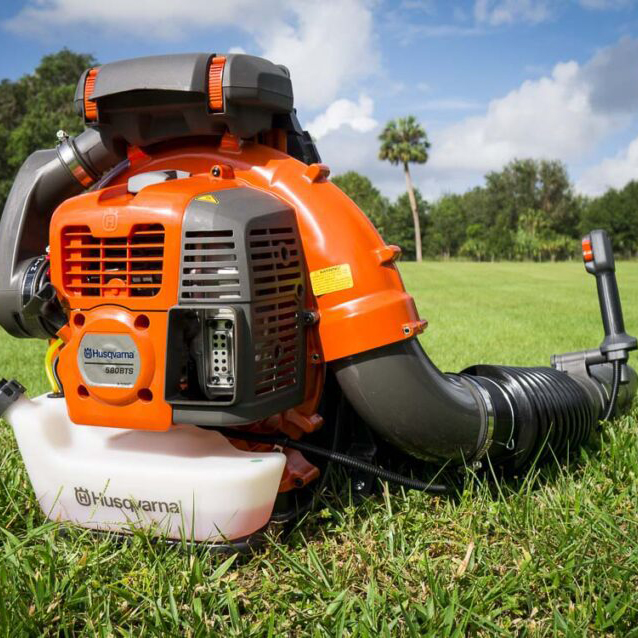
Backpack blowers are especially useful for larger properties because the weight is distributed across your shoulders and back rather than being carried entirely in one hand.
When comparing backpack blowers, look at things like:
- harness design
- padding
- weight distribution
- handle position
- vibration
- throttle controls
- tube adjustability
A blower may technically have enough power for the job, but if it becomes uncomfortable after 15 minutes, you’re probably not going to enjoy using it.
Professional users notice this even more because they may have a blower on their back for hours at a time.
4. Cheap Leaf Blowers Often Sacrifice Durability
A leaf blower doesn’t have an easy life.
It gets transported in trucks, stored in garages, exposed to dirt and dust, run for long periods, and used during some of the messiest parts of the year.
Higher-quality equipment is generally designed around that reality.
You’ll often see better:
- engine components
- housings
- air filtration
- straps and harnesses
- controls
- tubes and connections
- fasteners
- fuel systems
These differences may not seem important on the first day you own the machine.
They become much more important several seasons later.
If you’re buying equipment you expect to use regularly for years, durability should be part of the purchase decision from the beginning.
5. A Good Blower Starts Reliably
This sounds obvious until you own a blower that takes ten pulls every time you need it.
A quality gas-powered blower should be designed to start consistently when it has been properly maintained.
If a blower becomes difficult to start, stalls after running for a few minutes, or won’t stay running at full throttle, the problem can come from several areas, including old fuel, clogged filters, fuel-system issues, or improper storage.
Smith & Sons has previously covered some of the most common reasons a leaf blower starts and then stalls, including fuel and airflow problems. They also provide leaf blower repair and parts service at their Marshfield location.
That serviceability is another important difference between buying quality equipment and buying something essentially disposable.
6. Parts and Service Matter More Than Most People Think
One of the biggest differences between a good piece of outdoor power equipment and a cheap one may not show up until something breaks.
Can you get a replacement filter?
Can you get a fuel line?
Can you replace the starter assembly?
Are replacement tubes, straps, or controls available?
Is there someone locally who can diagnose the machine?
Equipment from established outdoor-power brands tends to have a much better support network than unknown or inexpensive brands sold primarily on price.
Smith & Sons services leaf blowers and other outdoor power equipment and stocks parts for brands including Husqvarna and RedMax, along with engine manufacturers such as Kawasaki, Honda, Briggs & Stratton, and Kohler.
That can add years to the usable life of a blower.
7. The Best Blower Depends on the Property
There isn’t one leaf blower that’s right for everyone.
Small properties
If you’re mainly clearing:
- sidewalks
- patios
- decks
- small lawns
- driveways
a lighter handheld or compact blower may be all you need.
The advantage is lower weight, easier storage, and quicker grab-and-go use.
Medium and large residential properties
For properties with mature trees or substantial fall cleanup, a backpack blower starts to make much more sense.
You gain:
- more airflow
- greater range
- better comfort over longer sessions
- faster cleanup
Smith & Sons currently carries Husqvarna backpack blowers including residential models such as the 150BT as well as higher-output models like the 560BTS and commercial 580BTS.
Landscapers and commercial users
Professional crews usually need a blower that can run day after day.
In that situation, durability, power-to-weight ratio, ergonomics, parts availability, and service support often matter more than the initial purchase price.
A cheaper blower that regularly goes down during the busy fall season isn’t actually cheaper.
Gas vs. Battery Leaf Blowers
Another important decision is the power source.
Battery blowers
Battery equipment can be a great option for:
- quick cleanup
- smaller properties
- noise-sensitive areas
- homeowners who don’t want to store fuel
- people already invested in a battery-tool platform
They’re easy to start and typically require less routine maintenance.
The main considerations are runtime and battery capacity.
Gas blowers
Gas blowers still make a lot of sense for:
- large properties
- extended cleanup
- heavy leaf cover
- professional landscaping
- areas where you can’t easily stop to recharge batteries
For many fall cleanup jobs in Massachusetts, especially larger wooded properties, the additional runtime and sustained output of a quality gas backpack blower can be a major advantage.
Is a More Expensive Leaf Blower Worth It?
Not always.
If you clear one small driveway a few times every fall, buying the biggest commercial backpack blower available probably doesn’t make sense.
But there is a point where buying strictly on price becomes expensive in a different way.
A better blower may give you:
- faster cleanup
- better reliability
- more comfortable operation
- longer equipment life
- better access to replacement parts
- professional service support
The best value is usually the machine that matches how often you use it and how demanding the work is.
Signs You May Be Buying the Wrong Leaf Blower
Before buying, watch for a few warning signs:
- Performance claims focus on only one specification.
- The blower feels poorly balanced.
- Controls feel flimsy or awkward.
- Replacement parts are difficult to find.
- There is no nearby service support.
- The brand has little established outdoor-power-equipment presence.
- You’re choosing solely based on the lowest purchase price.
A blower doesn’t need to be commercial grade to be good.
It does need to be appropriate for the job.
Choosing a Leaf Blower at Smith & Sons
D.H. Smith & Sons carries outdoor power equipment for both homeowners and professional landscapers, including Husqvarna handheld equipment and backpack blowers. Smith & Sons is also an authorized Husqvarna dealer and offers local parts and equipment service from its Marshfield location.
If you’re not sure how much blower you actually need, that’s where buying locally can help.
Instead of trying to decode specifications by yourself, you can compare machines based on:
- property size
- number of trees
- type of debris
- residential vs. commercial use
- preferred weight
- expected runtime
- budget
And if the blower needs service later, you already know where to bring it.
Smith & Sons is located at 887 Plain Street in Marshfield, Massachusetts, and carries equipment for homeowners and contractors throughout the South Shore. shopsmithandsonsmarshfield.com
Frequently Asked Questions
What is more important on a leaf blower, CFM or MPH?
Both matter. CFM measures the volume of air being moved, while MPH measures its speed. Higher airflow helps move larger quantities of leaves, while higher air speed helps loosen heavier or stubborn debris. A good blower combines both effectively.
Are backpack leaf blowers better than handheld blowers?
For larger properties and longer cleanup jobs, usually yes. Backpack blowers generally provide more power and distribute the weight across your shoulders and back. Handheld blowers can be a better option for small properties and quick cleanup.
Is a commercial leaf blower worth it for a homeowner?
It can be if you have a large property, many mature trees, or frequently deal with heavy fall cleanup. For smaller properties, a residential model will usually provide better value.
How long should a good leaf blower last?
There isn’t one fixed lifespan. Usage, storage, fuel quality, maintenance, and equipment quality all make a difference. Regular maintenance and access to replacement parts can significantly extend the useful life of outdoor power equipment.
Can Smith & Sons repair leaf blowers?
Yes. Smith & Sons lists leaf blowers among the outdoor power equipment serviced by its technicians, including equipment that wasn’t originally purchased there.
Does Smith & Sons sell Husqvarna leaf blowers?
Yes. Smith & Sons is an authorized Husqvarna dealer and carries Husqvarna handheld outdoor power equipment, including blowers.


